
Did you have an erection when you woke up this morning? Did you dismiss it as a random event, or did you stop to think about what it might mean for your health? Many Australian men overlook this natural function. Yet, morning erections are not simply about sex. They are a pretty reliable indicator of vascular and hormonal health.
Why Do Morning Erections Happen?
Morning erections, or nocturnal penile tumescence (NPT), occur during the REM stages of sleep. This is when your brain and body are in deep recovery mode. They are not always connected to erotic dreams. Instead, they reflect healthy blood flow, balanced testosterone and proper nerve function. The bladder slowly filling up overnight can also activate the parasympathetic sacral nerves (S2-4) which overlap with the neural circuits that control erections. Erections (as opposed to ejaculation) are a parasympathetic response so you need a certain level of relaxation to get an erection which is why stress and anxiety can make them difficult.
So, if you are under 40 and waking up with morning erections most days, it’s usually a green light for your health. But if they are absent or noticeably weaker, should you be concerned?

The Link Between Erections and Overall Health
A famous quote from the Roman Stoic philosopher Seneca says, ‘The body should be treated more rigorously, that it may not be disobedient to the mind.’ Morning erections are exactly that kind of signal: your body’s quiet way of reporting back.
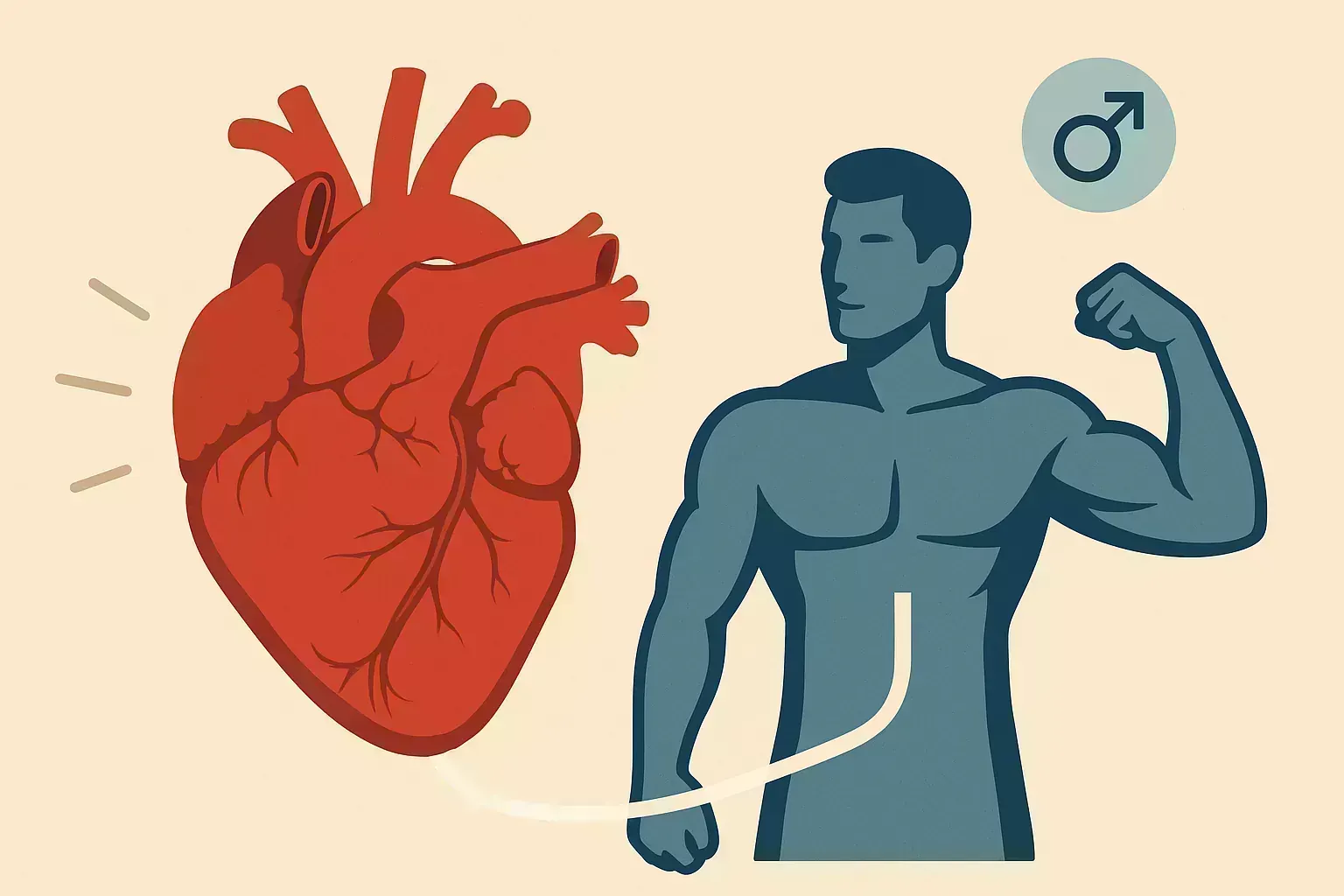
Scientific evidence supports the idea that erectile dysfunction can be a warning sign. A large systematic review and meta-analysis published in The Journal of Sexual Medicine (2019) found that erectile dysfunction is an independent predictor of future cardiovascular events. In other words, if your morning erections are becoming less frequent, it may not just be about sex – it could be about your heart, your blood vessels, and your long-term health.
Men in Their 40s and 50s: What Changes?
For men between 40 and 50, testosterone levels naturally begin to dip, sleep quality often suffers due to work and family pressures, and stress can play a larger role. Morning erections may become less regular, but they should not disappear entirely.
Over 50, reduced frequency can be normal. Yet, if they vanish altogether, it may point to treatable issues like poor circulation, low hormones or metabolic health problems. The key is not to dismiss these changes as just “getting older”. If things change either suddenly (like over days or a week or two), or are slowly getting worse week on week or month on month - definitely time to check in with your regular GP.

What Should You Do Next?
If you are under 40 and you have stopped waking up with erections, ask yourself: is this an early health warning?
If you are in your 40s or 50s and they are becoming less reliable, are you prepared to accept that, or do you want to explore ways to improve your health more broadly?
If you are over 50, do you see morning erections as a sign of vitality and longevity, and are you taking steps to preserve them?
The next step is not about embarrassment. It is about action.
Sure, there are no shortage of services that will prescribe you a pill pretty quickly, but if your testosterone is through the floor, they may not work very well, or at all.

Morning erections are not just about sex. They are your body’s daily health check. Ignoring them is like ignoring the warning light on your car dashboard. If you have a penis and value your health, energy and longevity, it is time to take them seriously.
Follow me for more insights on men’s health:
Instagram: @drjames.au
Facebook: Dr James
This article is for information purposes only. It is not personalised medical advice. Please consult your own GP before making any health decisions.
Sources
Zhao B, Hong Z, Wei Y, Yu D, Xu J, Zhang W. Erectile Dysfunction Predicts Cardiovascular Events as an Independent Risk Factor: A Systematic Review and Meta-Analysis. J Sex Med. 2019;16(7):1005-1017. doi:10.1016/j.jsxm.2019.04.004




0 comments